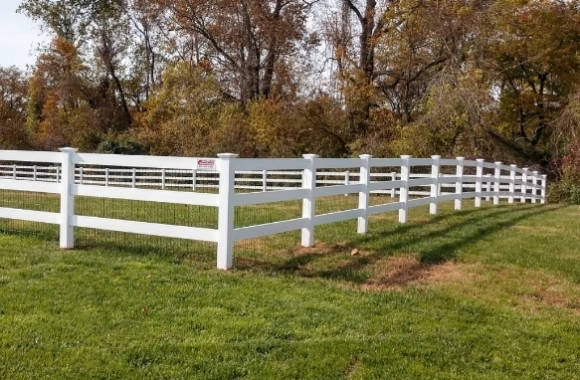
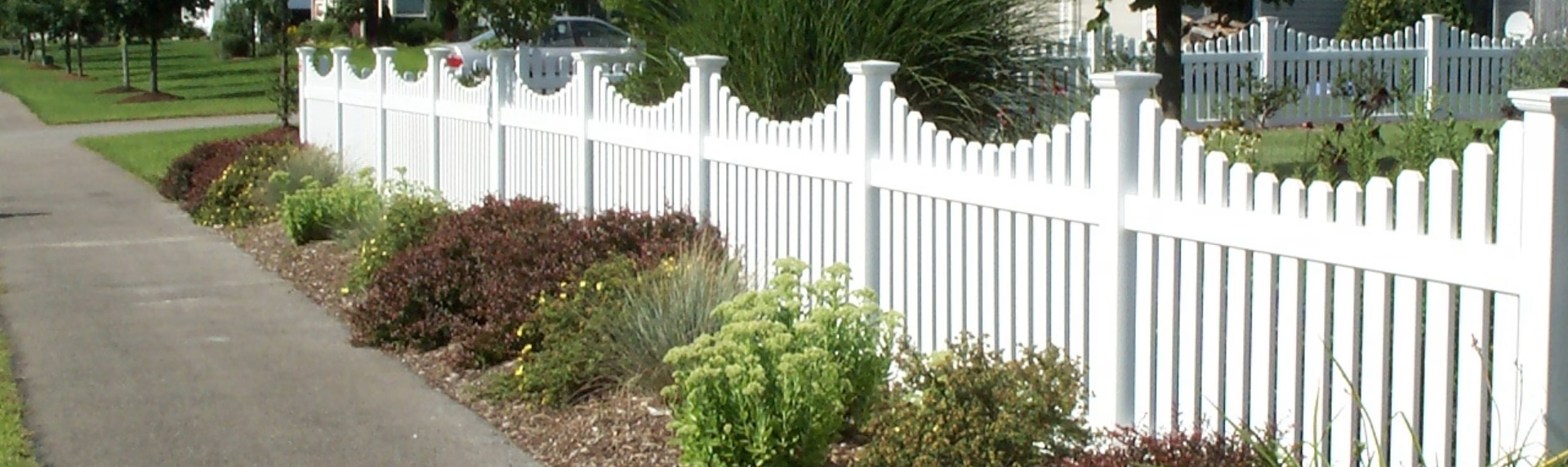
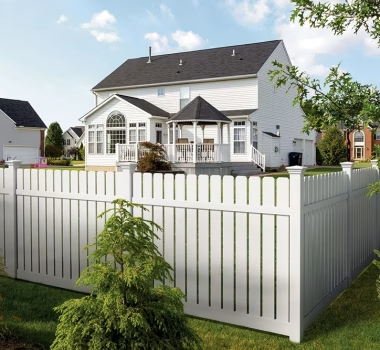
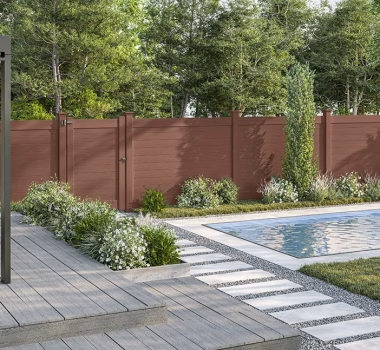
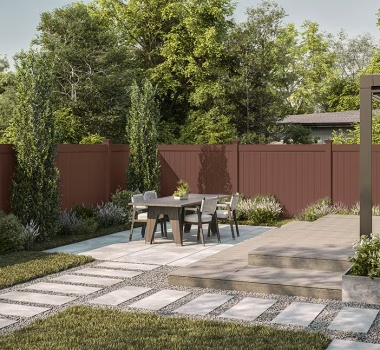
Low-maintenance and long-lasting, vinyl doesn’t peel, rot, or need repainting. Vinyl fencing is a great choice for privacy, picket, or decorative styles.
Fence Installation
A fence isn’t just posts, nails, and boards. It’s an investment in your property. Professional installation helps ensure:
- Posts are set to the correct depth and spacing
- Materials are installed to withstand local weather conditions
- Your fence meets zoning and permit requirements
- You avoid costly repairs down the road
Fence & Deck Connection is proud to offer a Lifetime Structural Warranty, so you can rest easy knowing your home is properly secured.
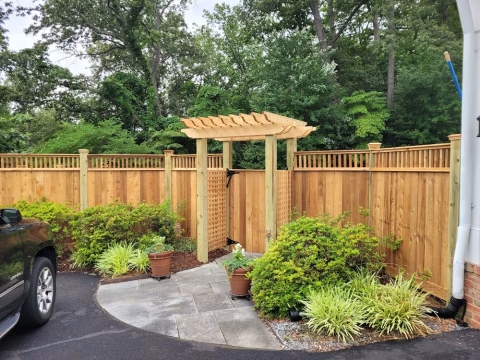
Fence Materials & Styles We Install
Choose from a variety of durable fencing materials and styles designed to enhance privacy, security, and the look of your property.
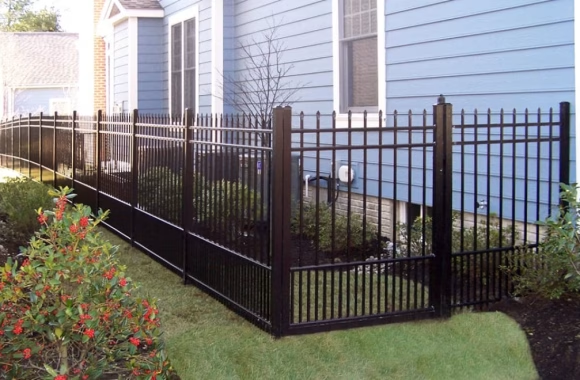
Aluminum Fencing
Sleek, durable, and rust-resistant. Ideal for pool enclosures, security, and modern or elegant aesthetics.
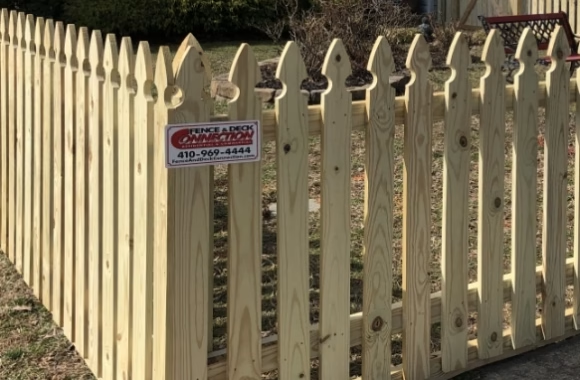
Wood & Cedar Fencing
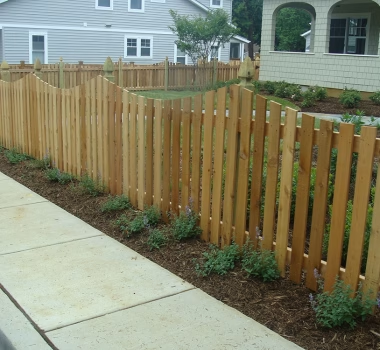
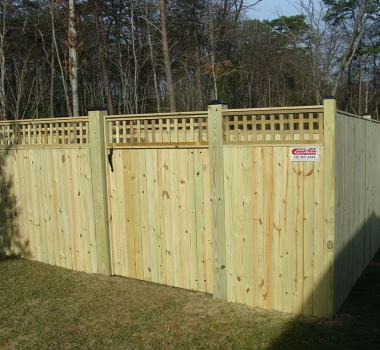
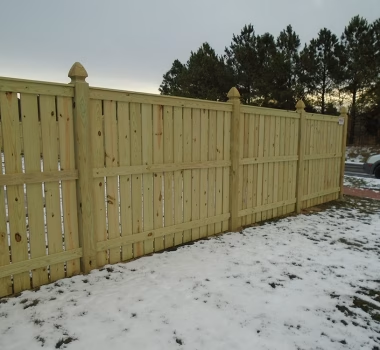
Warm, classic, and customizable, wood fencing is the charming choice for privacy, ranch rail, board-on-board, and architectural styles.
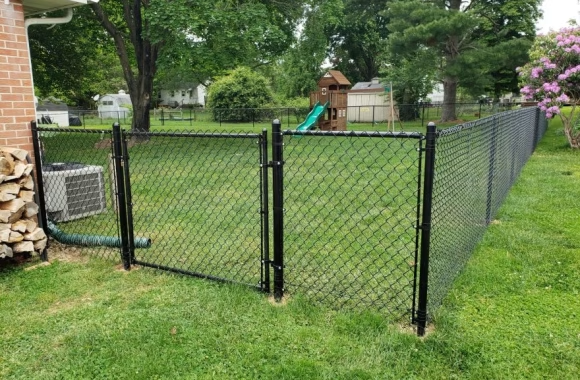
Chain Link Fencing
Affordable and practical, chain link fencing offers security on a budget.
Invest in a Fence You Can Trust.
Every installation is backed by our Lifetime Structural Warranty and a team committed to doing it right.
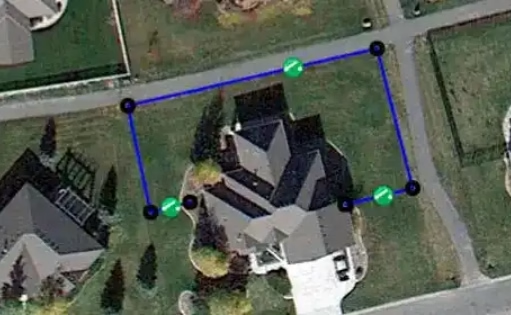
Fence Estimator
Use our Online Estimator to get a FREE fence estimate today.
Get a quote from our team
Fill out this form to start your project!
Premium Fences in Maryland, Delaware, Virginia, and Savannah
Check Service Availability
Enter your Zip code to confirm we serve your area.
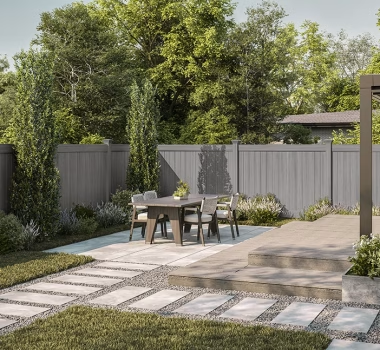
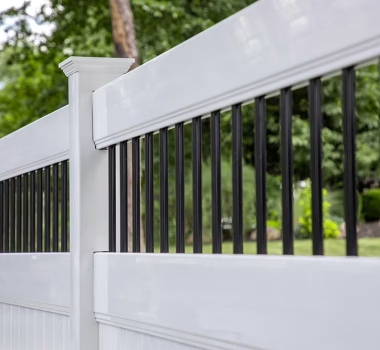
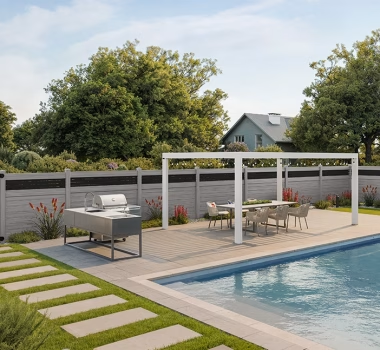
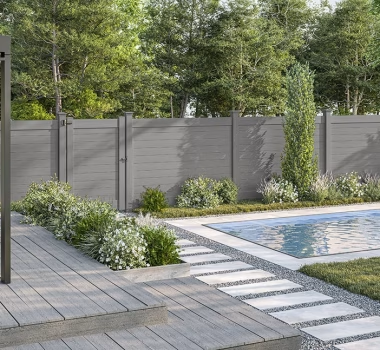
Explore Our Fence Gallery
Browse our photo galleries below to see real projects we’ve installed in neighborhoods throughout Maryland, Virginia, Delaware, and Georgia.
Fence FAQs
You can power wash wood, aluminum, and vnyl fencing to remove stubborn dirt, debris, or grime. Cleaning with soap and water once a year will to maximize the lifespan of your fence, and wood fences should be properly stained or sealed. If you do not have the tools to clean your fence, we recommend using city clean if you do not have the tools to do the project on your own. Click here to visit their website, or call them at 877.410.Wash (9274).
This depends on the county in which you live, and is occasionally dependent on your city and/or community as well. We typically pull the permit for you, but ask that you provide us with your property plat with the location of the fence, style, height, and description noted. We will provide structural drawings and plans, as well as ICC codes and other miscellaneous requirements. During the application process, we may request additional information.
Vinyl – Most of the time it is as simple as adjusting the bolt portion of the hinge on a vinyl gate.
Wood – If your wood gate misaligns, take a screwdriver and unscrew the “catch”, then take a hammer and gently tap down until it aligns. For more problematic gates, a professional might have to edge the gate (if wood) or actually re-hang a vinyl gate.
In most cases, this will encapsulate moisture and create a problem. The over hydration of the wood will drastically accelerate rot decay and insect damage. If this stacked debris situation is likely to be inevitable, try to avoid cedar wood. Vinyl is a great alternative in this case, as it does not absorb any moisture and so the moisture will have little to no effect.
Typically you will only need a permit if your fence is over 6′ high, your property is waterfront, or your house is on a corner. For corner lots, the fence must be 25′ or further from the corner so that it does not block the view of traffic. Waterfront fences must be 4′ high or shorter in spans that are directly between the home and the water. They must also have 2.25″ spacing to minimize view obstruction and to allow small animals to pass.
In Anne Arundel County Maryland, there is not a requirement for the finished side of the fence, although there are in many Home Owners Association covenants. Please be sure to get HOA approval with any construction project in your community.
| TYPE | COVERED | NOT COVERED |
| PVC or Aluminum |
|
|
| Pressure Treated Fencing |
|
|
There are several differences that should be taken into consideration:
| TYPE | PROS | CONS |
| Western Red Cedar | Western Red Cedar is a beautiful naturally rot resistant material with no pressure treatment process necessary. This keeps the material much more dimensionally stable and alleviates much of the warping, twisting and checking seen in pressure treated material. As with any lumber product there will always be some degree of this but much less than pressure treated. | Cedar is a bit more expensive depending on current lumber market conditions and will have a tendency to rot and decay if in ground contact or in a very wet environment where moisture is encapsulated. |
| Pressure Treated Wood | Our pressure treated fence board is a domestic southern yellow pine treated with an environmentally friendly pressure treated process giving it a lifetime above the ground warranty for rot decay and insects. You will not find bark, wane or decayed knots on our fence boards. We have even requested that the unsightly grade stamps be removed. | By the pure nature of the pressure treated process the cell structure of the southern yellow pine is damaged to some extent. This is why pressure treated material has a tendency to warp, twist, and check. |
We highly recommend that you have your property professionally surveyed with any new fence installation and we can provide this service for a very reasonable rate. You can attempt to find the original survey pins w/ a metal detector. The survey pins are typically set w/ rebar and a plastic cap. Ultimately it is the homeowner’s responsibility to have their lot lines established.
Yes, you may notice on your plat it is stated “Not to be used to establish boundary lines”. While they are typically very close, they are not intended to be exact.
Other than corner lot set backs there is no designation on how close you can install your fence to the lot line. If we have a staked survey we will typically set our fences back 4” to account for the footing.
Typically, post depths extend 50% of the above-ground height. For example, a 4ft high fence would require footer holes that are 24” deep.
Every project is different. Your sales consultant will inform you of the implementation timelines.